IN CHINA
FILL OUT THE FORM
CHINA MARKET OPPORTUNITIES
The China market offers opportunities for companies that can navigate its evolving sales and distribution landscape. Before the launch of economic reforms in 1978, the PRC government controlled China’s nationwide distribution channels, including the system of managed distribution centers, wholesale operations, and retail outlets.
The State Planning Commission issued production requirements and allocated inventory. As reforms progressed, the government phased out central planning for many products. China’s 2001 World Trade Organization (WTO) entry brought more foreign competition, which led to the elimination of many local distribution points and the centralization of main provincial hubs. These changes allowed for greater privatization of distribution at a local level.
In 2004, China issued rules that opened distribution to foreign investment and, among other things, allowed foreign distribution companies to apply for national wholesale licenses. Today, foreign enterprises may participate in joint-venture distribution operations for most wholesale operations.
CHINA DOMINATION
Today, mass distribution in China is dominated by large Asian groups, with Chinese distributors taking the most significant market share.
Shanghai Bailin on its own has 5000 sales outlets and a turnover of EUR 6.8 billion. Lotus, a Thai distribution group, is also a major player in China.
Groups from outside of Asia, including Carrefour and Walmart, have also been able to establish themselves, but foreign firms have yet to significantly establish themselves in rural areas, thus traditional trade is still significant.
Bottlenecks in logistics expansion
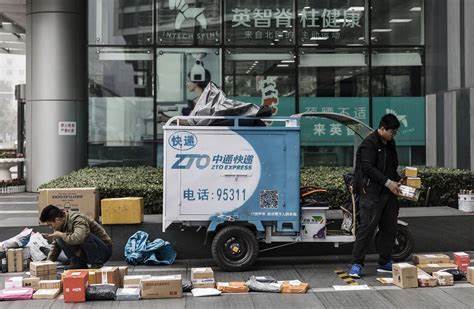
Logistics in China is a highly fragmented industry. Bottlenecks hamper efficient and low-cost product delivery. With more than 730,000 registered logistics operators, according to the Global Supply Chain Council, coordinating supply chain capacity and material handling often affect material flows.
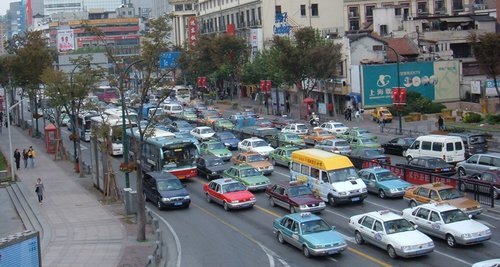
One challenge with logistics optimization involves city restrictions on truck sizes during certain times of day. Shanghai, like many other major Chinese cities, limits the use of trucks during daylight hours to alleviate traffic congestion. This complicates distribution and batch shipment optimization. Distribution companies must resort to a fleet of smaller cars and vans or pay exorbitant taxes and fees to use trucks.
Companies must also decide whether to outsource logistics or develop in-house logistics capabilities. According to the Global Supply Chain Council, third-party logistics is a more than ¥60 billion ($8.8 billion) market in China. As logistics outsourcing grows, competitive advantages for third-party logistics providers—namely in service and efficiency—will lead to greater integration for business operations.
DISTRIBUTORS JUST FOR YOUR PRODUCT
There both evident and subtle nuances to mastering logistics in China. Through years of experience and a proven track record of success, PCG knows how to manage the obstacles which lie ahead. Be a part of the multifaceted and multi-industry digital ecosystem that touches every aspect of the Chinese consumers’ lives.